
It’s 3 PM on the hottest Saturday in July. A homeowner, whose AC unit has just started blowing warm air, isn’t flipping through a phone book. They’re grabbing their smartphone and searching “emergency AC repair near me.” In that moment of crisis, your visibility in Google’s local search results is the only thing that matters. It’s the difference between a high-value service call and a lost opportunity to a competitor who ranks one spot higher.
This isn’t just a hypothetical; it’s the reality of the modern HVAC industry. A staggering 80% of local searches convert into customers [1], and with over 1.5 billion “near me” searches happening every month, the opportunity is immense. For an HVAC contractor in a U.S. market valued at over $30 billion [2], mastering local Search Engine Optimization (SEO) is no longer a marketing luxury; it’s the most critical investment you can make to ensure a steady stream of high-intent customers when they need you most.
This guide moves beyond generic advice. We’ll break down the specific, actionable strategies that top-performing HVAC companies are using to dominate their local markets in 2026. From optimizing for seasonal demand swings to addressing the real-world anxieties of homeowners, you’ll learn how to build a powerful digital presence that generates consistent, profitable leads.
Table of Contents
- Your Digital Storefront: Mastering Google Business Profile
- Beyond “AC Repair”: Advanced Keyword Strategy for HVAC
- From Service Area to Ranking Power: Hyper-Local Landing Pages
- Building Trust Before the Truck Arrives: Reputation & Citations
- The Mobile-First Mandate: Optimizing Your Site for Emergency Calls
- Frequently Asked Questions for HVAC Business Owners
1. Your Digital Storefront: Mastering Google Business Profile
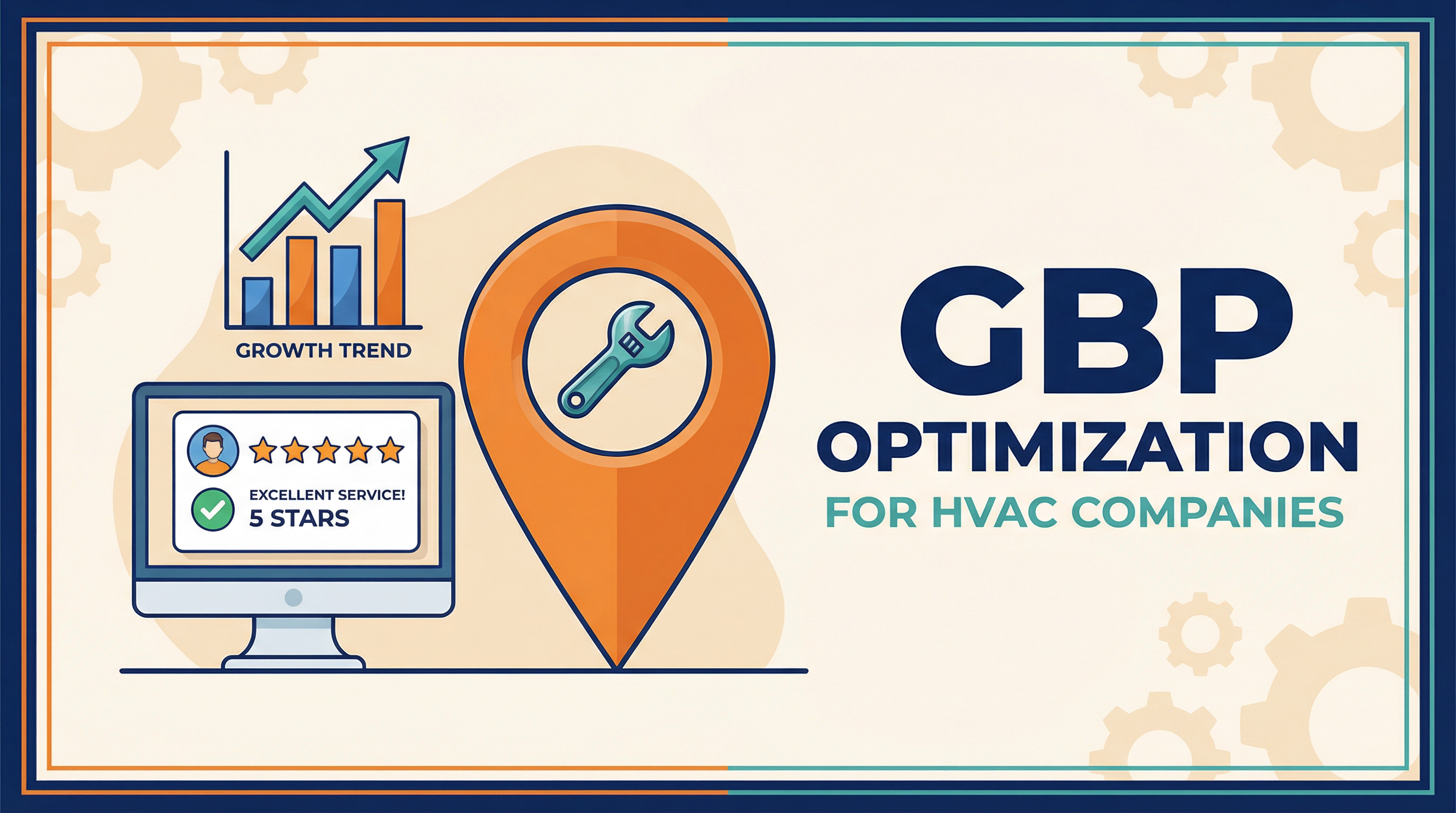
Think of your Google Business Profile (GBP) as your most important digital asset. It’s your virtual storefront, influencing your rank in the Google Maps “Local Pack” where 93% of local searches display results [3]. For HVAC, a complete and active profile isn’t just beneficial; it’s essential. Customers are 70% more likely to visit a business with an optimized GBP [1].
How to Optimize Your GBP for HVAC
Go Beyond Basic NAP
Of course, your Name, Address, and Phone (NAP) must be accurate. But for HVAC, you need more. List your 24/7 emergency hours separately from your standard business hours. Clearly define your service areas by zip code and city. Use the description to mention key differentiators like “NATE-Certified Technicians,” “Authorized Carrier Dealer,” or “Specializing in Ductless Mini-Splits.”
Strategic Category Selection
Your primary category must be “HVAC Contractor.” But the secondary categories are where you gain an edge. Add specific services like “Air Conditioning Repair Service,” “Furnace Repair Service,” “Heating Contractor,” and “Air Duct Cleaning Service.” This tells Google to show your profile for specific, high-intent searches beyond the general “HVAC near me.”
Show, Don’t Just Tell, with Photos
Homeowners are inviting you into their homes; they want to see who you are. Upload high-quality photos of your branded vans, your technicians in uniform (with their permission), and before-and-after shots of clean, professional installations. A photo of a newly installed heat pump or a tidy furnace setup builds more trust than a stock image ever could. Profiles with 100+ photos get significantly more engagement.
Leverage Google Posts for Seasonal Demand
Your business isn’t static, and your GBP shouldn’t be either. Use Google Posts to align with seasonal needs:
- Spring: “Get Your AC Tune-Up Before the Summer Rush! 10% Off This Month.”
- Summer: “24/7 Emergency AC Repair. Don’t Sweat It, Call Us!”
- Fall: “Furnace Safety Check & Maintenance Specials Available Now.”
- Winter: “No Heat? We Offer Fast, Reliable Furnace Repair.”
💡 Pro Tip: Use the Q&A section to proactively address customer anxieties. Seed it with questions you get all the time, like “How much does a diagnostic visit cost?” or “Do you offer financing for new system installations?” and provide clear, helpful answers.
2. Beyond “AC Repair”: Advanced Keyword Strategy for HVAC
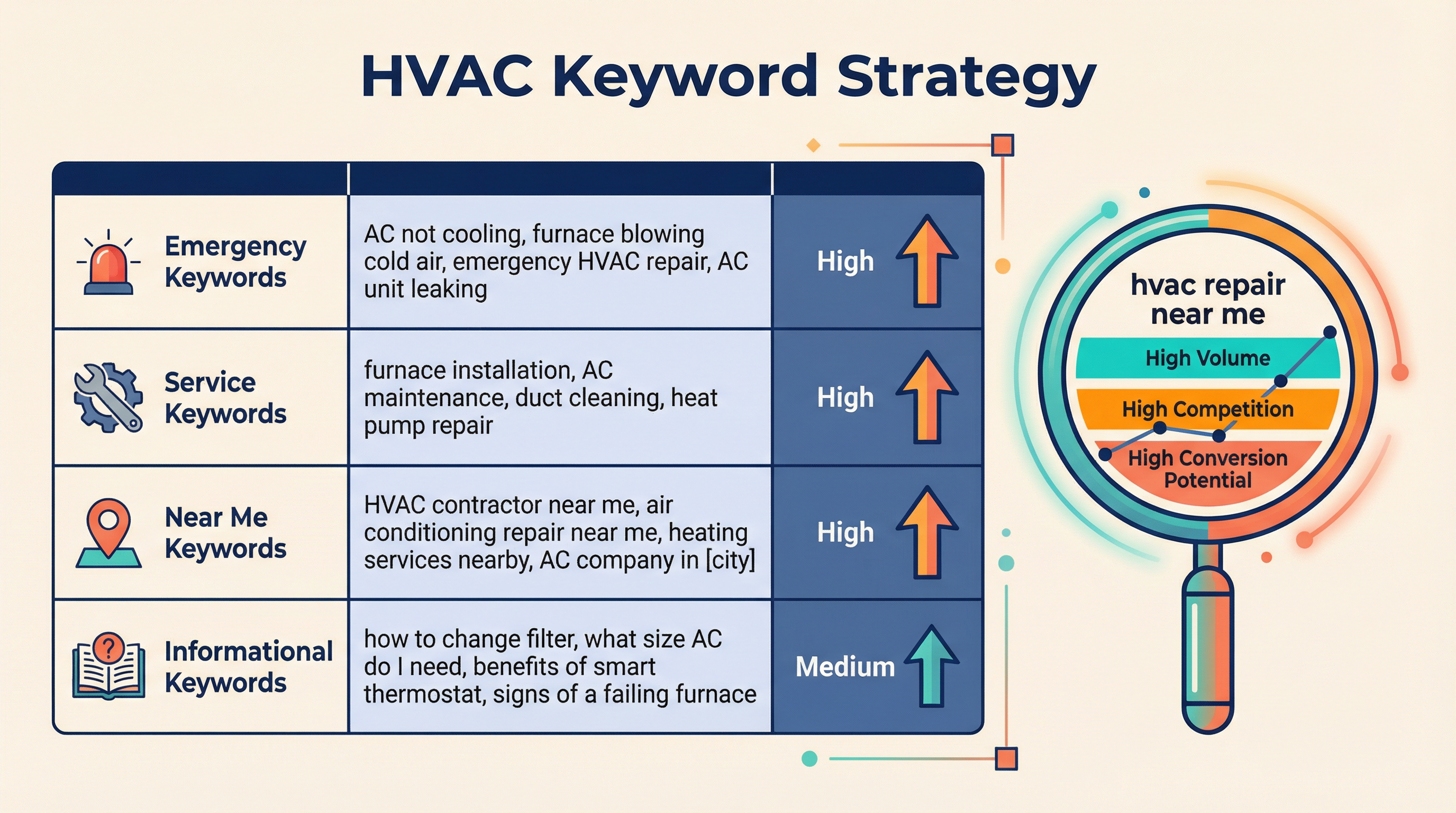
Effective HVAC SEO requires understanding the specific language customers use in moments of distress, curiosity, and purchase consideration. A one-size-fits-all keyword list won’t capture the nuances of the HVAC customer journey.
The Four Tiers of HVAC Keywords
| Keyword Category | Customer Mindset & Examples | Search Intent |
|---|---|---|
| Emergency & Problem | “AC not blowing cold air,” “furnace making loud noise,” “emergency heat pump repair” | Highest |
| Service & Solution | “new AC unit installation cost,” “ductless mini-split installer [city],” “furnace replacement financing” | High |
| Brand & Comparison | “Trane vs Carrier reviews,” “best smart thermostat for two-story home,” “[Competitor Name] vs [Your Company]” | Medium-High |
| Informational & DIY | “how to change HVAC filter,” “what SEER rating do I need,” “signs of a refrigerant leak” | Medium |
Use tools like Ahrefs and SEMrush to find these terms, but also listen to your customers. What phrases do they use when they call? That’s your keyword goldmine. Integrate these terms into your website’s service pages, location pages, and blog content. For example, create a dedicated page for “Furnace Repair” that also addresses “furnace making loud noise” and “cost to fix pilot light.”
💡 Pro Tip: Create content around the 2026 refrigerant changes (the phase-out of R-410A). Articles explaining what this means for homeowners, the benefits of new systems (like those using R-32 or R-454B), and potential rebates can position you as a forward-thinking authority and capture search traffic from proactive customers.
3. From Service Area to Ranking Power: Hyper-Local Landing Pages
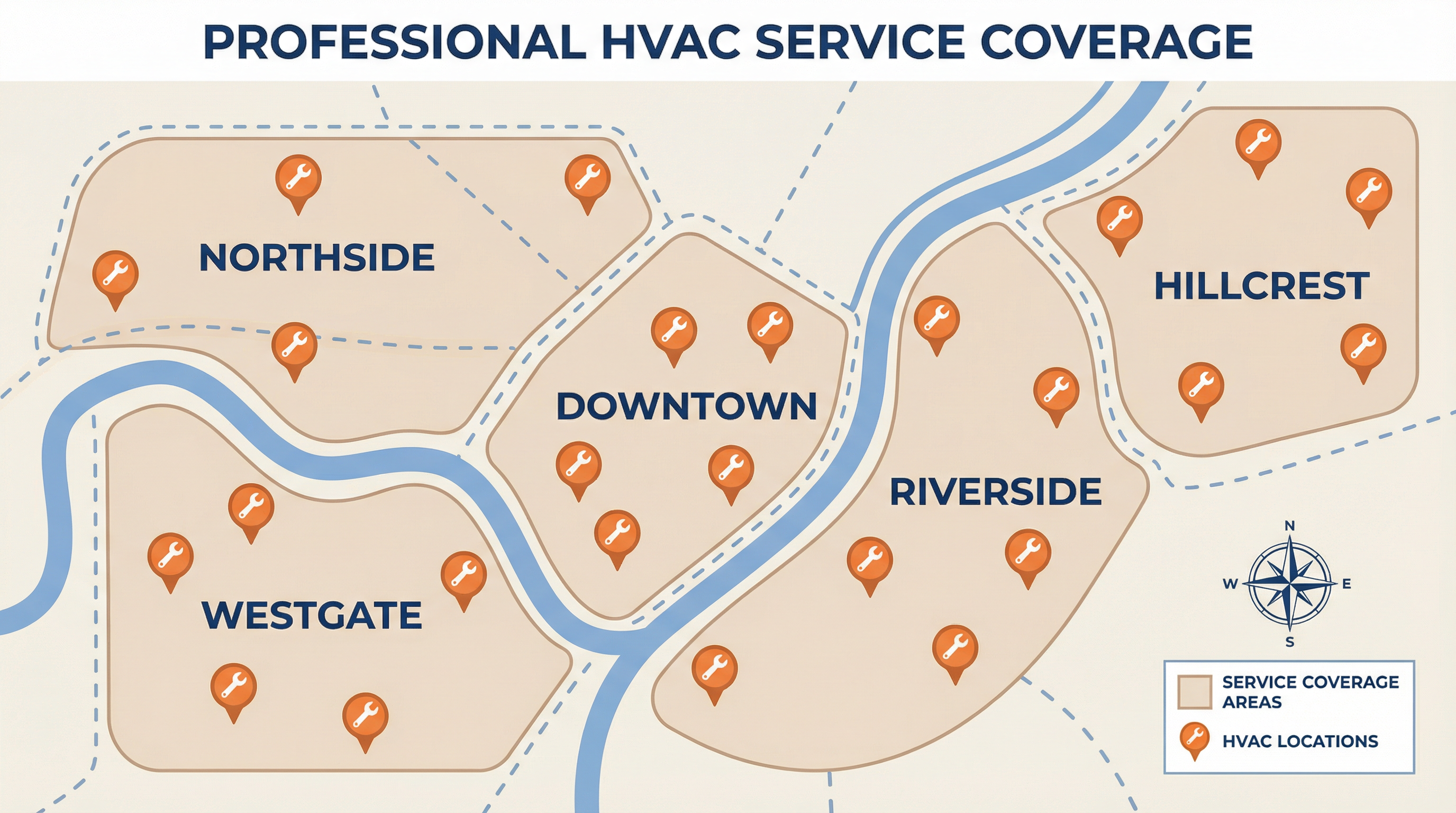
Simply listing the towns you serve on your contact page is not enough. To truly rank in neighboring cities, you need dedicated, hyper-local landing pages. Each page acts as a digital foothold in that specific community, telling Google you are a relevant local provider for that area.
Blueprint for a High-Ranking HVAC Location Page
Unique, Localized Content
Do not copy and paste content. For each page, write a unique introduction that mentions the specific city. Reference local landmarks, neighborhoods, or even common types of housing in the area (e.g., “Serving the historic homes of [Neighborhood] with modern, high-efficiency HVAC solutions”).
Include Local Proof
Feature testimonials from customers in that specific city. A review that says, “John from [Your Company] was a lifesaver during the [City Name] heatwave!” is incredibly powerful. Embed a Google Map showing your service radius with a pin on the target city.
Hyper-Targeted On-Page SEO
Optimize the page’s title tag and H1 heading to be specific: “Trusted HVAC Services in [City], TX” or “24/7 Emergency AC Repair in [City], VA.” Mention the city and nearby neighborhoods naturally throughout the page content.
These pages will start ranking for valuable, location-based searches like “[City] furnace installation” or “air conditioning service in [City],” driving highly qualified traffic you would otherwise miss.
4. Building Trust Before the Truck Arrives: Reputation & Citations
In the HVAC business, trust is everything. Homeowners are cautious about who they let into their homes, and they rely heavily on third-party validation. Your online reputation is your digital handshake. This is especially true when 55% of negative HVAC reviews are driven by delays and poor communication [2].

Mastering HVAC Citations
Citations are mentions of your business’s NAP online. Consistency is paramount. An incorrect phone number or old address on a directory can erode Google’s trust in your data. Start with the essentials:
- Home Service Platforms: Angi, HomeAdvisor, Thumbtack
- General Directories: Yelp, Better Business Bureau (BBB)
- Hyper-Local: Nextdoor, your local Chamber of Commerce
A Proactive Review Generation Strategy
Waiting for reviews to trickle in is not a strategy. You need a system. Studies show that 41% of positive reviews specifically mention friendliness and courtesy [2], proving that customer interaction is as important as technical skill. Implement a process to automatically send a review request (via text or email) within hours of a completed service call. Make it easy for the customer with a direct link to your Google review page.
Crucially, respond to every single review—positive and negative. A thoughtful response to a negative review, offering to make things right, can often win more trust than a dozen 5-star ratings.
5. The Mobile-First Mandate: Optimizing Your Site for Emergency Calls
An incredible 76% of people who search for a local business on their smartphone visit a location within 24 hours [1]. For HVAC emergencies, that timeline is even shorter. Your website must be designed for a customer who is stressed, impatient, and using their thumb.
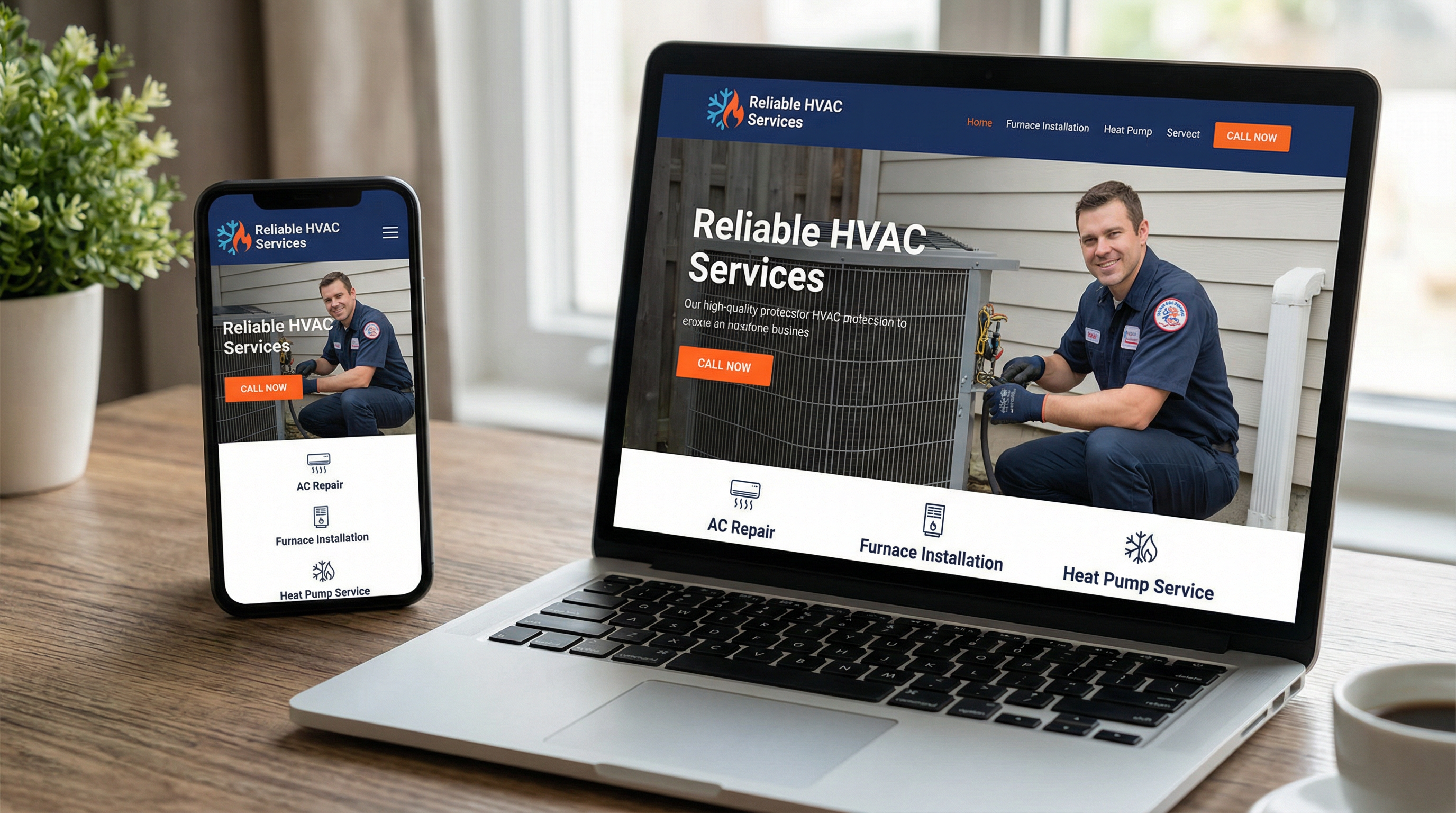
The HVAC Mobile Optimization Checklist
Sub-3-Second Load Speed
Every second counts. Use Google’s PageSpeed Insights to diagnose issues. Compress images, leverage browser caching, and invest in quality hosting. A slow website is a lost lead.
Click-to-Call Buttons Everywhere
Your phone number should be a clickable button, prominently displayed in the header and a “sticky” footer that stays visible as the user scrolls. Don’t make a frantic customer search for your contact info.
Simple, Clear Navigation
Organize your services logically: “Cooling,” “Heating,” “Air Quality,” “Maintenance Plans.” A user should be able to find the page for “AC Repair” in two taps or less.
Build Trust on the Page
Your service pages should immediately address customer anxieties. Prominently display:
- Trust Badges: NATE-Certified, BBB Accredited, EPA Certified.
- Financing Options: Show logos for partners like GreenSky or Wells Fargo.
- Urgency Signals: “24/7 Emergency Service Available.”
- Social Proof: Display your star rating and number of reviews.
A website optimized for conversion can increase lead volume by 40-60% from the exact same amount of traffic. It’s not just a brochure; it’s your hardest-working salesperson.
Frequently Asked Questions for HVAC Business Owners
How long does local SEO really take to show results for an HVAC business?
While top-ranking pages have an average age of over two years [1], you can expect to see initial movement in local rankings and map visibility within 3-4 months. Achieving dominant, page-one rankings for competitive terms like “AC installation [city]” typically takes 6-12 months of consistent effort.
What’s more important: a good website or a good Google Business Profile?
They work together, but start with your Google Business Profile. It’s the engine of your local visibility, appearing in up to 93% of local searches [3]. Your website then acts as the conversion tool, providing the detailed information and trust signals needed to turn a searcher into a customer.
How much should I budget for local SEO?
Successful HVAC companies in competitive markets typically invest between $1,500 and $5,000 per month. This covers technical SEO, content creation, citation management, and strategy. The ROI from a properly executed campaign consistently outperforms traditional advertising, with an average HVAC cost-per-lead around $153 [2].
With the 2026 refrigerant changes, how can SEO help?
Create a dedicated page or blog post explaining the R-410A phase-out. Optimize it for keywords like “new refrigerant laws,” “cost of R-454B systems,” and “eco-friendly air conditioners.” This positions you as an expert and captures customers who are proactively researching their next system upgrade.
Can I do local SEO myself?
While you can handle basics like claiming your GBP, effective local SEO is a full-time job requiring technical expertise and constant adaptation to Google’s algorithm. With a nationwide shortage of over 110,000 technicians [2], your time is best spent running your business while experts manage the complex work required to generate sustainable results.
Ready to Turn Searches into Service Calls?
Local SEO is the engine of modern HVAC lead generation. It’s a direct line to customers in their moment of need. But it’s not a set-it-and-forget-it task. It requires deep industry knowledge, technical precision, and a commitment to consistent execution.
At NOVA Advertising, we specialize in marketing for home service companies. We understand the seasonal peaks, the customer pain points, and the competitive landscape of the HVAC industry. We’ve helped contractors like you increase their emergency calls by over 150% and achieve page-one rankings that deliver a steady, predictable flow of jobs.
Our HVAC Marketing Services Include:
- Dominant Local SEO: We get you ranked in the Google Maps pack for the keywords that matter.
- High-Conversion Websites: We build sites designed to turn visitors into booked appointments.
- Targeted Google Ads: We generate immediate leads for your most profitable services.
- 5-Star Reputation Management: We build the trust that closes deals.