- 1. Introduction: Your Website as a Lead-Generating Machine
- 2. The Allure of Website Templates: Quick, Easy, and Affordable?
- 3. The Power of Custom Web Design: Tailored for Your Success
- 4. SEO Advantages: Why Custom Websites Rank Higher
- 5. Conversion Optimization: Turning Visitors into Leads
- 6. The Investment in Custom Web Design: A Long-Term ROI
- 7. Conclusion: Choose Bespoke for Sustainable Business Growth
1. Introduction: Your Website as a Lead-Generating Machine
In today’s fiercely competitive digital landscape, your business website is far more than just an online brochure. It’s your 24/7 sales representative, your primary marketing hub, and, most importantly, a powerful lead-generating machine. For many businesses, especially service-based ones, the website is the first point of contact with potential clients. Its design, functionality, and overall user experience can make or break a first impression, directly influencing whether a visitor stays to learn more or clicks away to a competitor. The goal isn’t just to have a website; it’s to have a website that actively works for your business, attracting qualified leads and guiding them seamlessly through the conversion funnel.
However, a critical decision arises early in the website development process: should you opt for a pre-designed template or invest in a custom web design? While templates offer apparent advantages in terms of speed and initial cost, their limitations often hinder long-term growth and lead generation potential. This blog post will delve into a comprehensive comparison between custom web design and website templates, revealing why a bespoke website, meticulously crafted to align with your unique business goals and brand identity, is the superior choice for driving more qualified leads and achieving sustainable business success. We’ll explore the hidden costs of templates, the unparalleled benefits of custom solutions, and how a tailored approach can significantly impact your SEO, user experience, and ultimately, your bottom line.
2. The Allure of Website Templates: Quick, Easy, and Affordable?
Website templates have gained immense popularity, particularly among startups and small businesses, due to their perceived ease of use, speed of deployment, and lower upfront costs. Platforms like WordPress (with themes), Squarespace, Wix, and Shopify offer a vast array of pre-designed layouts that promise a professional-looking website without the need for extensive coding knowledge or a significant budget. For those with limited resources or a simple online presence requirement, templates can seem like an ideal solution.
2.1. Advantages of Using Website Templates
- Cost-Effectiveness: Templates are generally much cheaper than custom designs, with many free options available and premium ones costing a fraction of a bespoke project.
- Speed of Deployment: You can launch a website quickly with a template, as the basic structure and design are already in place. This is appealing for businesses needing an immediate online presence.
- Ease of Use: Many template platforms feature drag-and-drop builders, making it easy for non-technical users to customize content and layout without coding.
- Pre-built Features: Templates often come with pre-integrated features like contact forms, galleries, and e-commerce functionalities, reducing the need for additional development.
2.2. Hidden Limitations and Disadvantages of Templates
While the initial appeal of templates is strong, they come with significant drawbacks that can impede your lead generation efforts and long-term growth:
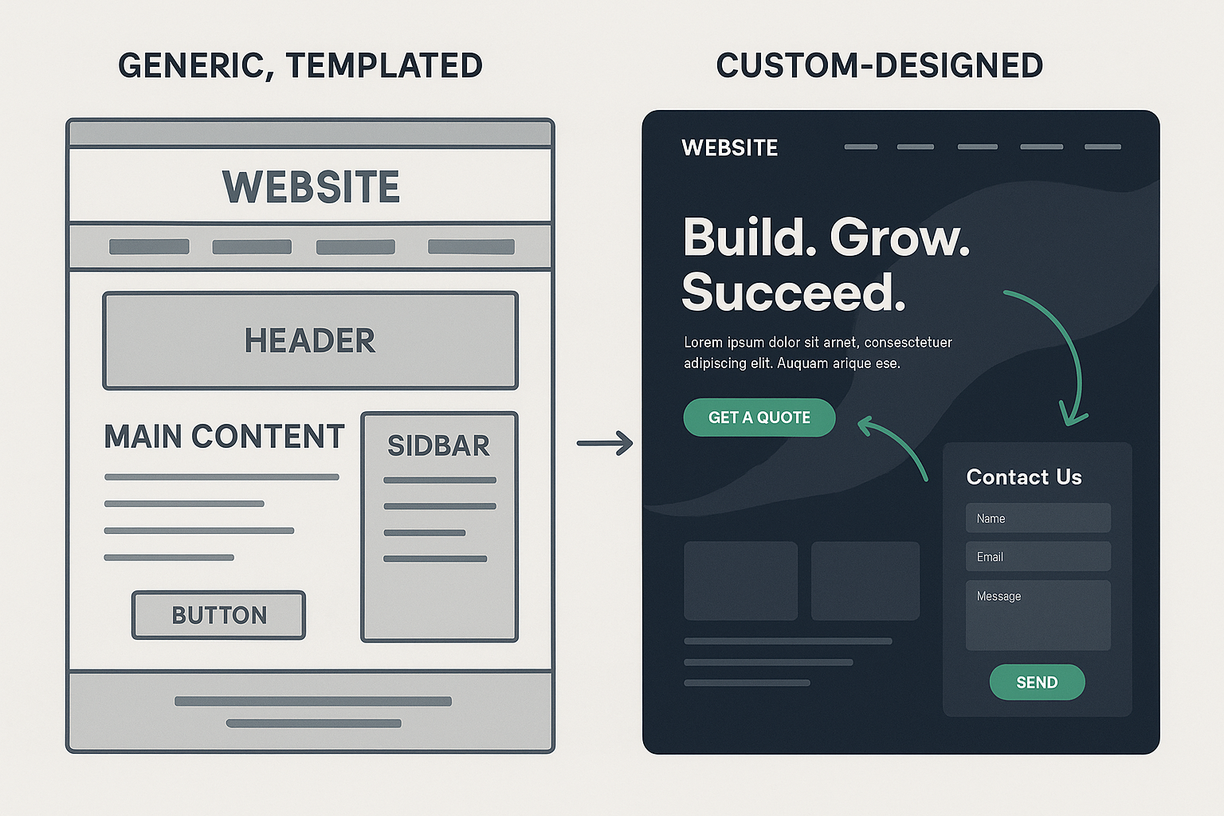
- Lack of Uniqueness: Templates are used by thousands, if not millions, of other websites. This makes it incredibly difficult to stand out from competitors and establish a unique brand identity. Your website might look generic, failing to leave a memorable impression on visitors.
- Limited Customization: While templates offer some customization, you’re often confined to the pre-defined structure and design elements. Achieving a truly unique look or specific functionality can be challenging, if not impossible, without extensive and often complex coding, which defeats the purpose of using a template.
- Bloated Code and Slower Performance: Templates often include excessive code and features that you may not need, leading to slower loading times. This
can negatively impact user experience and SEO rankings, as search engines prioritize fast-loading sites.
* Security Vulnerabilities: Popular templates can be targets for hackers, and if not regularly updated or properly secured, they can pose significant security risks to your website and data.
* Scalability Issues: As your business grows, your website needs may evolve. Templates can be rigid and may not easily accommodate new features, integrations, or significant changes in content structure, forcing a complete redesign down the line.
* Subpar SEO Performance: While some templates claim to be SEO-friendly, their generic structure and often bloated code can hinder optimal search engine performance. Custom solutions allow for precise SEO implementation.
3. The Power of Custom Web Design: Tailored for Your Success
In contrast to templates, custom web design involves building a website from the ground up, specifically tailored to your business’s unique needs, brand identity, and strategic objectives. This bespoke approach ensures that every element, from the visual aesthetics to the underlying code, is optimized to achieve your specific goals, particularly in lead generation.
3.1. Uniqueness and Brand Identity
A custom website is a direct reflection of your brand. It allows for complete creative freedom, ensuring that your site stands out from the competition and leaves a lasting impression. Every color, font, layout, and interactive element can be meticulously designed to align with your brand’s personality and values, fostering a strong and memorable brand identity that resonates with your target audience. This uniqueness builds trust and professionalism, which are crucial for attracting high-quality leads.
3.2. Superior User Experience (UX) and User Interface (UI)
Custom design prioritizes the user journey. A well-designed custom website focuses on intuitive navigation, clear calls-to-action, and a seamless flow that guides visitors effortlessly towards conversion goals. The User Experience (UX) is meticulously planned to ensure visitors find what they need quickly and enjoy their interaction with your site. The User Interface (UI) is crafted to be visually appealing and easy to use, enhancing engagement and reducing bounce rates. This tailored approach leads to higher satisfaction and increased time on site, both positive signals for search engines.
3.3. Scalability and Future Growth
Unlike templates, custom websites are built with future growth in mind. As your business expands, introduces new services, or enters new markets, your website can easily adapt and scale. New functionalities, integrations with other business systems (like CRM or marketing automation platforms), and additional content can be seamlessly incorporated without requiring a complete overhaul. This long-term flexibility protects your initial investment and ensures your website remains a valuable asset.
3.4. Enhanced Security and Performance
Custom-built websites typically have cleaner code, fewer unnecessary plugins, and are less prone to the vulnerabilities often found in widely used templates. This results in enhanced security, reducing the risk of cyber threats. Furthermore, optimized code and tailored infrastructure contribute to superior performance, including faster loading times and smoother functionality, which are critical for both user satisfaction and search engine rankings.
4. SEO Advantages: Why Custom Websites Rank Higher
While templates often claim to be SEO-friendly, custom web design offers inherent advantages that significantly contribute to higher search engine rankings and better organic visibility. The ability to control every aspect of the website’s development allows for precise and powerful SEO implementation.
4.1. Clean Code and Faster Loading Speeds
Custom websites are built with lean, optimized code, free from the bloat and unnecessary scripts often found in templates. This clean code translates directly into faster loading speeds, a crucial ranking factor for Google. Search engines prioritize websites that offer a quick and seamless experience, and a custom-built site can be engineered for optimal performance from the ground up.
4.2. Flexibility for On-Page SEO Optimization
With a custom design, you have complete control over every on-page SEO element. This includes the ability to meticulously optimize:
- Title Tags and Meta Descriptions: Crafting unique, compelling, and keyword-rich titles and descriptions for every page.
- Header Tags (H1, H2, H3, etc.): Structuring content logically with proper heading hierarchy for readability and keyword inclusion.
- Content Structure: Organizing content in a way that is easily digestible for both users and search engine crawlers, incorporating relevant keywords naturally.
- Image Optimization: Ensuring all images are properly sized, compressed, and include descriptive alt text.
- Internal Linking: Implementing a strategic internal linking structure that passes link equity and guides users through your site.
4.3. Mobile-Friendliness and Responsive Design
Custom web design inherently allows for the development of a truly responsive website that provides an optimal viewing experience across all devices – desktops, tablets, and smartphones. This is critical for mobile-first indexing, where Google primarily uses the mobile version of your content for indexing and ranking. A custom responsive design ensures your site is not only accessible but also highly usable on any device, leading to better user engagement and lower bounce rates.
4.4. Easier Implementation of Schema Markup
Schema markup (structured data) helps search engines understand the context of your content, leading to rich snippets in search results that can significantly improve click-through rates. With a custom website, implementing various types of schema markup (e.g., LocalBusiness, Service, FAQPage, Product) is more straightforward and precise, allowing you to provide search engines with detailed information about your business and services, making your listings more prominent and informative.
5. Conversion Optimization: Turning Visitors into Leads
The ultimate goal of a business website is to convert visitors into leads and customers. Custom web design is inherently built with conversion rate optimization (CRO) in mind, allowing for strategic placement of elements that guide users towards desired actions.
5.1. Strategic Call-to-Actions (CTAs)
Custom websites allow for the strategic design and placement of compelling Calls-to-Action (CTAs) that are tailored to your specific conversion goals. Whether it’s a
“Book a Free Strategy Call” button, a “Get a Quote” form, or a “Download Our Guide” link, custom design ensures these elements are visually prominent, strategically located, and designed to maximize clicks and conversions. The design can be iteratively refined based on user behavior data.
5.2. Optimized Landing Pages
Custom web design allows for the creation of highly optimized landing pages, specifically designed to convert visitors for particular campaigns or services. These pages can be built without the constraints of a template, allowing for focused messaging, minimal distractions, and a clear path to conversion. Elements like compelling headlines, persuasive copy, trust signals (testimonials, badges), and streamlined forms can be perfectly integrated to maximize conversion rates.
5.3. A/B Testing and Analytics Integration
With a custom website, integrating advanced analytics tools (like Google Analytics 4) and A/B testing platforms is seamless. This allows for continuous monitoring of user behavior, identification of conversion bottlenecks, and iterative testing of different design elements, CTAs, and content variations. This data-driven approach ensures that your website is constantly optimized for maximum lead generation, a level of flexibility often limited by template platforms.
6. The Investment in Custom Web Design: A Long-Term ROI
While the initial cost of custom web design is typically higher than that of a template, it should be viewed as a strategic investment with a significant long-term Return on Investment (ROI). A custom website is a powerful asset that:
- Generates More Qualified Leads: By being optimized for SEO and conversion, a custom site attracts more relevant traffic and converts a higher percentage of visitors into leads.
- Builds Stronger Brand Authority: A unique, professional website enhances your brand perception, making you appear more credible and trustworthy to potential clients.
- Provides Scalability: It grows with your business, eliminating the need for costly and disruptive redesigns every few years.
- Offers Competitive Advantage: It helps you stand out in a crowded market, providing a superior online experience that differentiates you from competitors relying on generic templates.
- Reduces Hidden Costs: Avoids the hidden costs associated with templates, such as limitations on functionality, poor SEO performance, and the need for frequent workarounds or future overhauls.
7. Conclusion: Choose Bespoke for Sustainable Business Growth
In conclusion, while website templates offer a quick and inexpensive entry point into the online world, they often fall short in delivering the unique brand identity, superior user experience, and robust lead generation capabilities that businesses need to thrive. For NOVA Advertising and its clients, who are serious about transforming their websites into powerful lead-generating machines, custom web design is the unequivocally superior choice.
A bespoke website is an investment in your business’s future. It provides the flexibility, performance, and strategic advantage necessary to outrank competitors, captivate your audience, and consistently convert visitors into valuable leads and loyal customers. By choosing custom web design, you are not just getting a website; you are getting a meticulously crafted digital asset designed for sustainable growth and unparalleled success in the digital marketplace. Don’t settle for generic; choose bespoke, and watch your business flourish.